This past summer, 16 WSU undergraduate students from three campuses traveled to Fiji for an immersive study-abroad experience that challenged them to think differently about health, culture, community, and wellbeing. Led by Professors Caitlin Bletscher (WSU Vancouver) and Raven Weaver (WSU Pullman), the ten-day program brought classroom learning to life through engagement with Fijian educators, professionals, families, and communities.
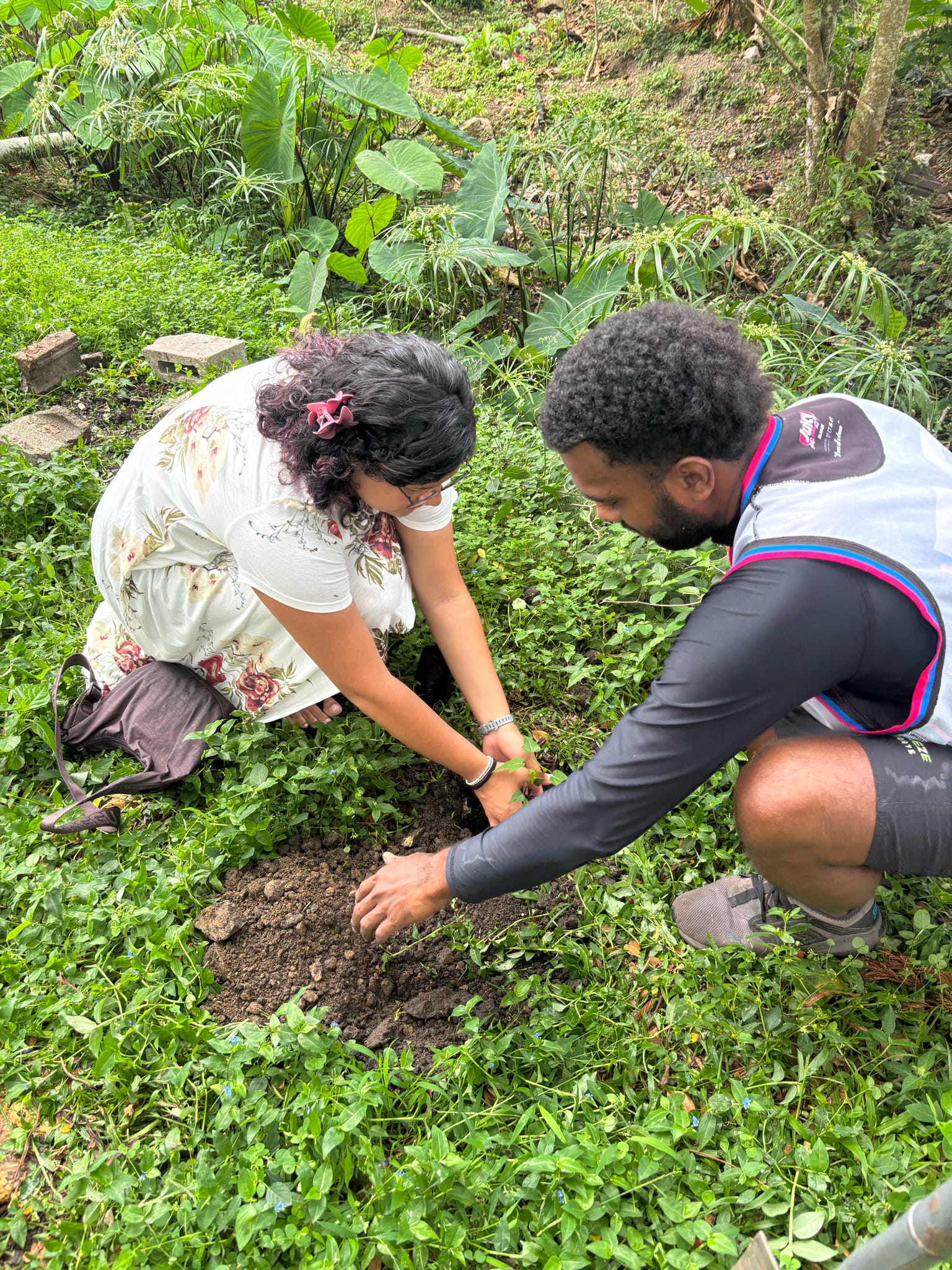
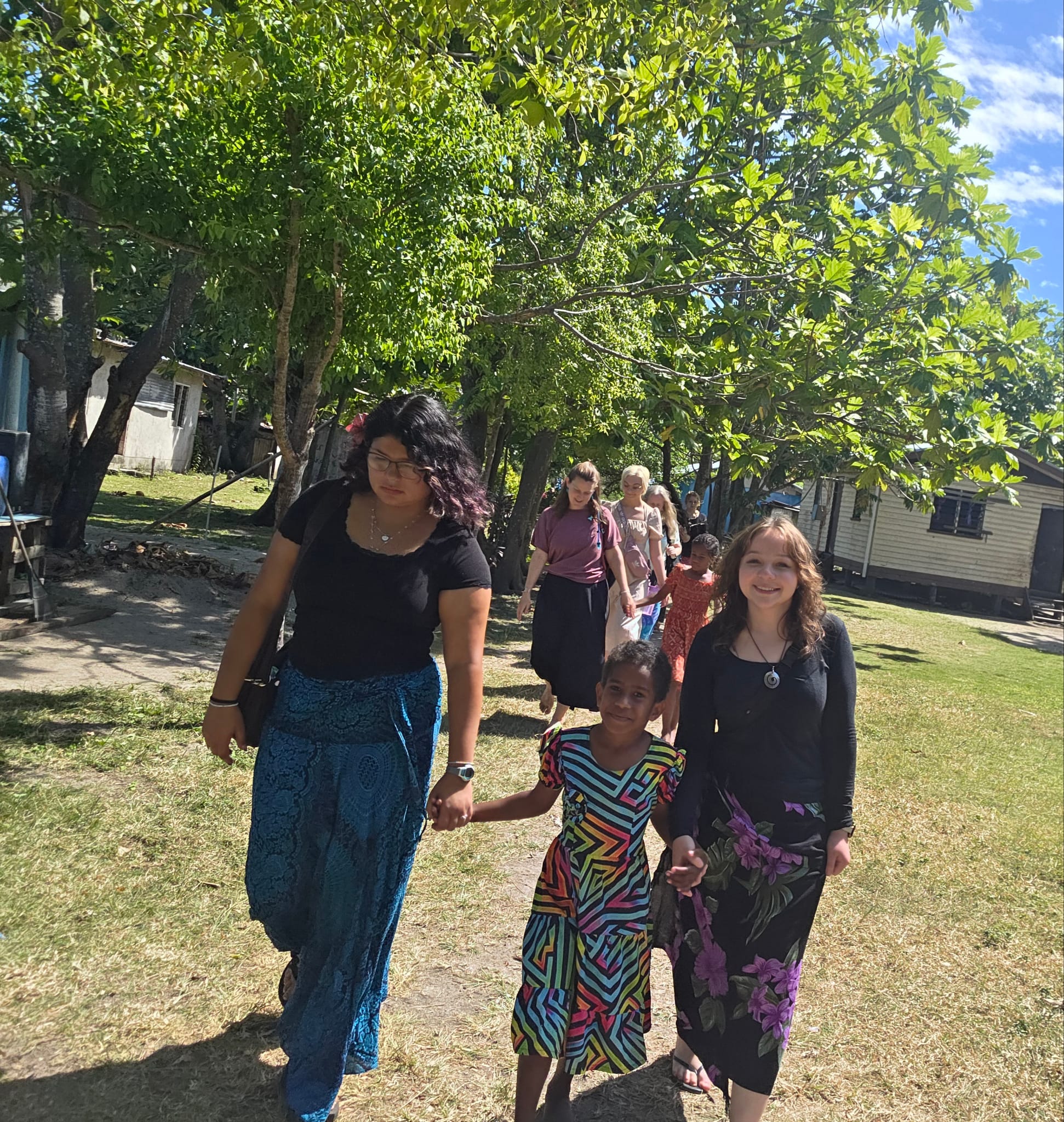
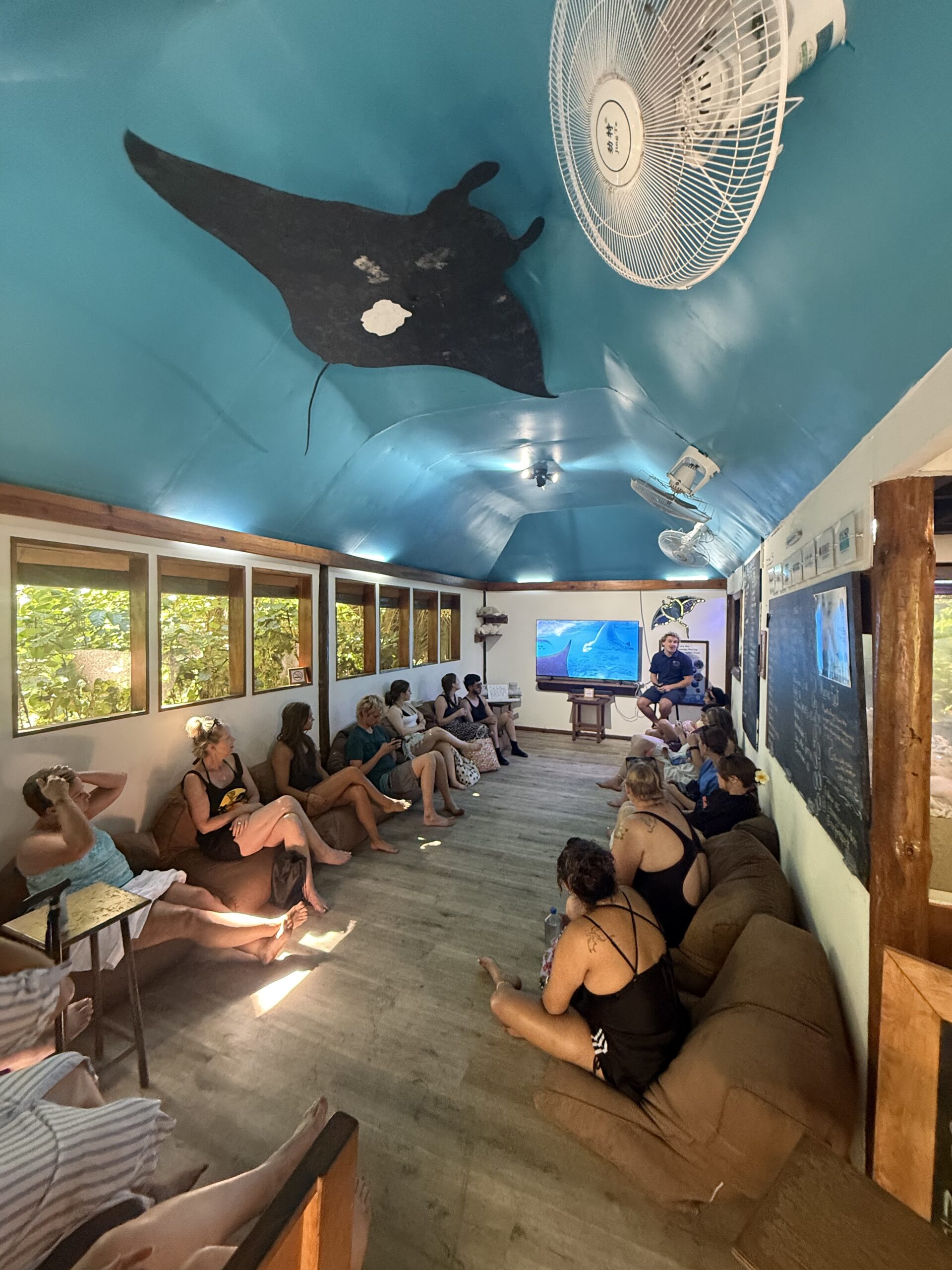
Students began at the University of the South Pacific, learning about social services and community life before traveling to Votua Village for homestays with local families. There, they took part in a traditional sevusevu welcome ceremony, shared food, music, and dance, and participated in a village service-learning project. Later, at Barefoot Manta Island Resort, students worked alongside a marine biology team on conservation efforts that included planting mangroves and restoring damaged coral.
Throughout the experience, students encountered Vanua, a Fijian concept that emphasizes the interconnectedness of people, culture, relationships, and the environment. That perspective offered a new way of thinking about community health and prompted students to reconsider assumptions they had brought with them from their coursework and lives in the United States.
In their reflections, students repeatedly pointed to the strength of community relationships and belonging as one of the most meaningful lessons of the program. They saw firsthand how family, intergenerational relationships, shared responsibility, culture, and social connectedness contribute to health and wellbeing. They also grappled with differences in healthcare access, traditional healing and Western medicine, and the importance of listening to communities rather than arriving with predetermined solutions.
The learning continued after students returned home. Several described experiencing “reverse culture shock” as they reconsidered their relationships with time, material resources, community, and one another. Others identified ways they hope to carry what they learned into future careers, particularly in healthcare and public health.
The Cougs in Fiji experience offered something difficult to replicate in a traditional classroom. Students returned to WSU not simply with new knowledge, but with new ways of thinking about health, community, culture, and their own roles in an interconnected world. Experiences like these demonstrate the power of transformative, community-centered learning to foster cultural humility, global awareness, and professional growth.