We advance behavioral health by strengthening the systems that deliver evidence-based practices. Led by Dr. Weybright, this work emphasizes collaboration with organizations such as the Cooperative Extension System to ensure that research-informed strategies are accessible, relevant, and sustainable. By bridging science and practice, we help professionals and communities create environments that support health and well-being. Please reach out if you’re interested in partnering or hearing more.
Key Activities
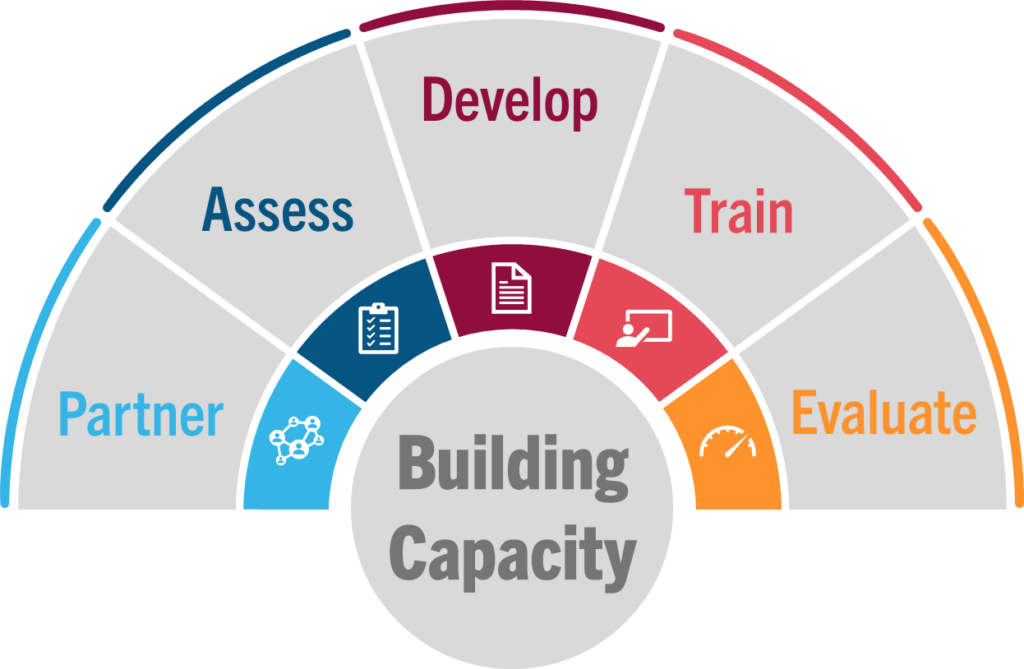
Key activities for capacity building fall within five areas include:
- partnering for relationship development,
- assessing to identify existing needs and gaps,
- developing tailored tools and resources,
- training delivered through webinars and skill-building workshops, and
- evaluation of process, outcomes, and impact.
Recent Capacity Building Work
Rural Behavioral Health Needs Assessment
We systematically identify gaps and priorities within organizations to inform strategic planning and resource development. Funded by the Substance Use and Mental Health Services Administration, we conducted a comprehensive assessment of Washington State Extension professionals to identify existing behavioral health programming, local needs, and readiness and capacity for adopting behavioral health programming. Long-term this assessment will strengthen WSU Extension’s ability to coordinate consistent, community-based behavioral health across the state. Link to brief report of findings forthcoming.
Development of Tailored Tools and Resources
Our team designs practical, evidence-based tools that align with the unique contexts and needs of professionals. In addition to scholarly publication, we have developed tools like the Youth Engagement Resource Guide and curriculum toolkits, like the Strengthening Families Program for Parents and Youth 10-14 years old virtual adaptation toolkit.
Training to Support Adoption of Evidence-based Practices
Dr. Weybright and colleagues have provided virtual and in-person trainings from introductory one-hour events to day-long workshops. Topics include community-based program implementation broadly, such as program selection and adaptation or youth engagement. We also train in specific evidence-based programs. Recent training partners include the virtual Guam Behavioral Health Conference, Washington State Division of Behavioral Health and Recovery provider professional development, and Oregon State University’s Oregon Parenting Education Collaborative.
Evaluation and Research to Understand Program Impacts and Build Capacity Across Systems
Recent efforts to build capacity across states and systems include an edited book on Health Extension: Community-Based Healthcare and the Future of Cooperative Extension as well as publications on the role of the Cooperative Extension System as a key partner to behavioral health in rural settings and delivery of training and technical assistance for evidence-based practices.