
WSU Extension YA4-H! is implemented in three components of:
- youth-adult partnerships,
- teens as teachers, and
- youth participatory action research.
Youth-Adult Partnerships
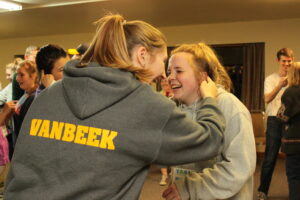
Developmental relationships between youth and adults are consistently identified as critical for effective youth programming. Youth-adult partnerships consist of two main features including youth voice in decision making and supportive adult relationships. Prior research indicates youth who participate in youth-adult partnerships experience greater empowerment, psychological agency, and community connectedness while developing problem solving and decision-making skills.
Teens as Teachers
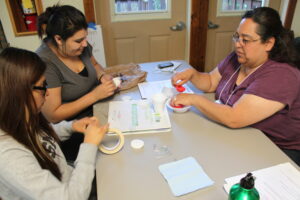
Teens as teachers uses a cross-age peer teaching model which is a relationship between two peers of the same generation where one peer is slightly older. Teen teachers not only promote positive outcomes among those they teach but also “learn by doing,” which is a 4-H tradition. Research finds teens demonstrate greater internalization of content delivered (e.g., nutrition education) but also develop life skills such as communication, leadership, and teaching skills.
Youth Participatory Action Research
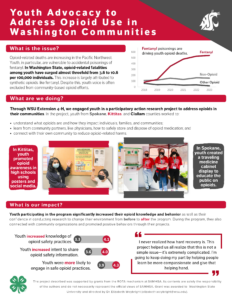
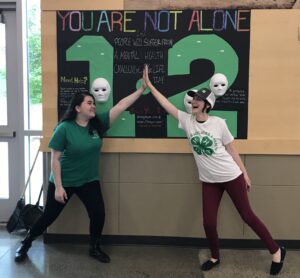
Youth participatory action research (YPAR) empowers youth with the skills to identify and research health concerns in their communities and take action to address them. This process is associated with greater civic engagement and youth empowerment.
Publications
Weybright, E. H., Hampilos, K., White, A. J., Grinstead, C., Fees, J., Greer, M., Doering, E. L., & Graham, L. M. (2025). “I never realized how hard recovery is.” A quasi-experimental evaluation of a youth participatory action research project for opioid prevention. American Journal of Community Psychology, 1–12. DOI: 10.1002/ajcp.70001
Weybright, E., White, A., Greer, M., Fees ,J., & Watters, C. (2023). Youth Engagement Resource Guide. Washington State University Extension.
Iniguez, A., Doering, E. L., & Weybright, E. H. (2023). Maximizing dietary knowledge and behavior through a teens as teachers approach. Journal of Extension, 61(3).
Lile, J. R., Weybright, E. H., & Watson, P. (2021). Using the 4-H Essential Elements to evaluate teen programming. Journal of Youth Development, 16(1), 55-73. Retrieved from Journal of Youth Development.
Beckmeyer, J. J. & Weybright, E. (2020). Exploring the association between middle adolescents’ romantic activity and their positive youth development. Journal of Adolescence, 80, 214-219.
Weybright, E. H., Martinez, A. D., Varrella, G., Deen, M., & Wright, K. (2018). Teens as teachers: Positive outcomes and recommendations for promoting healthy nutrition in adolescents [Special Issue]. Journal of Youth Development, 13(3), 37-54. doi:10.5195/jyd.2018.595.
Weybright, E. H., Trauntvein, N., & Deen, M. (2017). “It was like we were all equal”: Maximizing youth development using youth-adult partnerships [Special Issue]. Journal of Park and Recreation Administration, 35(1), 5-19. doi:10.18666/JPRA-2017-V35-I1-7246.
White, A., Scanga, L. H., & Weybright, E. (2017). Connecting the dots: Positive youth development framework and the Essential Elements of 4-H (FS261E). Washington State University Extension. Retrieved from CAHNRS Extension Pubs.
Weybright, E. H., Hrncirik, L., White, A., Cummins, M., Deen, M., & Calodich, S. (2016). “I felt really respected and I know she felt respected too”: Using youth-adult partnerships to promote positive youth development in 4-H youth (PDF). Journal of Human Sciences and Extension, 4(3), 93-110.
Wallace, M., Weybright, E., Rohner, B., & Crawford, J. (2015). Parental over-involvement and competition in youth development programs (FS179E). Pullman, WA: Washington State University Extension. Retrieved from Research Exchange.
Presentations and Trainings
2025
- Webinar on “Engaging Youth in Community-Based Substance Use Prevention” hosted by the Northwest Rural Opioid Technical Assistance Collaborative
- Webinar on engaging teens in behavioral health advocacy using film titled “Frame by Frame: Guiding Teens to Advocate through Film” hosted by the Northwest Rural Opioid Technical Assistance Collaborative
2024
- Youth Participatory Action Research training for AZ Health Zone (State of Arizona SNAP-Ed)
2023
- “I Never Realized How Hard Recovery Is.” Evaluation of a Youth Participatory Action Research Project for Opioid Misuse Prevention presented at the Society for Research on Adolescence annual conference.
- Youth Engagement training for Washington State Division of Behavioral Health and Recovery
2022
- Youth Participatory Action Research for Substance Use Prevention: Associations with Youth Empowerment presented at the Society for Research on Adolescence annual conference.
2020
- Implications of the WA State 4-H teen assessment; National Association of Extension 4-H Agents (pdf)
- Youth Participatory Action Research training for Washington State SNAP-Ed
2019
- Maximizing Positive Youth Development through Nutrition Interventions presented at the WSU Showcase for Undergraduate Research and Creative Activities (pdf)
- Youth Advocates for Health (YA4-H!) Club: Building Community & Reducing Mental Health Stigma through Youth Participatory Action Research presented at the WSU Globalization Diversity and Education Conference (pdf)
- Maximizing Retention of Nutritional Knowledge and Healthy Behaviors through the Teen Teaching Model presented at the Society for Advancement of Chicanos/Hispanics and Native Americans in Science annual meeting.
2018
- Inspiring Healthy Change among Adolescents – The Teens as Teaching Model for Nutrition Education presented at the National Association of Extension 4-H Agent meeting.
2015
- Qualitative Evaluation of the 4-H Food Smart Families presented by WSU YA4-H! Program presented at the National Association of Extension 4-H Agents (pdf)
- Youth-Adult Partnerships to Promote Healthy Eating: Evaluation of ConAgra Food Smart Families presented by WSU YA4-H! presented at the National Health Outreach Conference (pdf)